
EKS extended support is a $0.60/hour tax. Plan the upgrade.
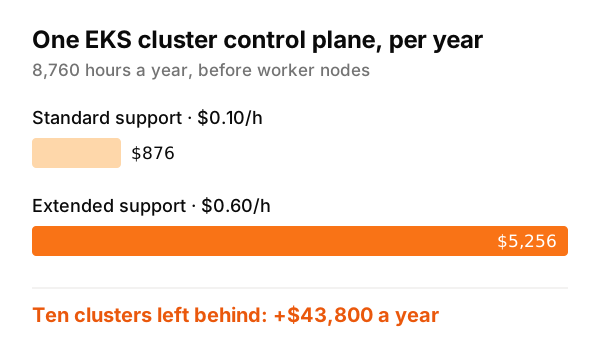
When an EKS version leaves standard support, AWS does not turn the cluster off. It moves you to extended support. That is $0.60 per cluster per hour, six times the $0.10 standard control plane. Roughly $365 extra a month, per cluster, before worker nodes.
Ten clusters left behind after a busy quarter is not a thought experiment. It is a line item that looks like "we didn't add traffic" and still grows.
Extended support is a delay, not a strategy. You get more time on an old Kubernetes version. You do not get the rest of the ecosystem frozen with you. Controllers, CRDs, and add-ons move on. Security patches are narrower. New features stay on newer versions.
It is not only EKS
The same pattern exists on other managed engines. RDS, OpenSearch, and ElastiCache charge extra when you stay past standard support. The unit is often vCPU-hours, so a multi-node datastore hurts more than one idle cluster.
AWS documents the dates. Someone still has to map version to cluster to account. Cost Explorer will not title the line "you are on extended support." You see a higher EKS or RDS spend and start a thread.
What to do
Upgrade before the date, with a test cluster and a rollback. Treat "we will do it next quarter" as a budget decision, not a default. If you truly cannot move, know the hourly tax and put an owner on it.
unusd.cloud flags extended-support risk on EKS, RDS, OpenSearch, and ElastiCache next to idle waste, in the same read-only scan. Platform teams get the list in Slack or email. Leadership gets the rollup, not a Kubernetes changelog.
Scan an account if you are not sure which clusters already crossed the line.
Stop paying for resources nobody is using.
Connect a read-only role. Digest by email, full web report in the app - minutes to first scan.
Start free scan→