
Your Jenkins box does not work weekends. It still bills them.
Ask a platform team which boxes must run on Sunday. The honest list is short: prod, maybe a standby, maybe a build cache you have measured. The actual list in AWS is the same as Friday afternoon, plus whatever someone started for a demo and never tagged.
Working hours waste is not "the instance is idle." It is busy Monday to Friday, 08:00-18:00, and asleep the rest of the week, while the meter runs at 100 percent. A bastion. Jenkins. A fat RDS used by analysts who do not work Saturdays. You already know this. The bill does not care.
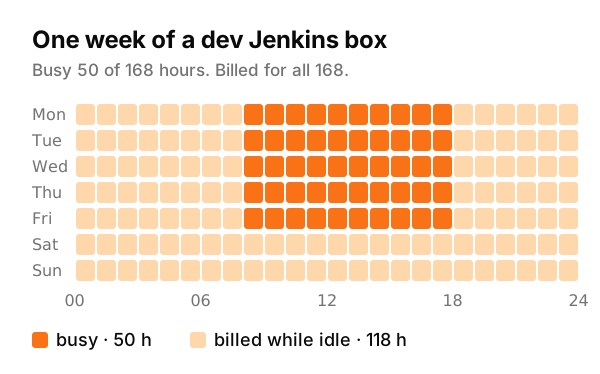
Native AWS almost gets you there
Instance Scheduler, scaling plans, and a well-written tag policy can stop this. Plenty of teams built that in 2019 and then the tag rot started. New accounts never got the stack. Someone launched an untagged m5.2xlarge for a hotfix and left it.
Cost Explorer will show you a higher EC2 line. It will not say "these three names are weekday-only." Compute Optimizer may suggest a smaller size. It will not suggest "turn it off at 18:00."
What the scan reports
unusd.cloud looks at usage shape over time and flags resources that look like a working-hours schedule. The report shows the names, the busy window, and a monthly figure if you stopped them outside that window. You still apply the scheduler, the tag, and the change ticket. Read-only, as usual.
That finding sits next to fully idle instances and detached volumes so you do not run two tools to ask two obvious questions.
Non-prod is where this pays. If you stop a 24/7 prod database because a blog post told you to, that is on you. The scan is a list. You are the change manager.
Run it on a sandbox first. If the first digest names a Jenkins box that has been up since 2024, you already know the rest.
Stop paying for resources nobody is using.
Connect a read-only role. Digest by email, full web report in the app - minutes to first scan.
Start free scan→